A Tax Rise from 15% to 21% Has Consequences That Reach Every Place Bet
 Available in US
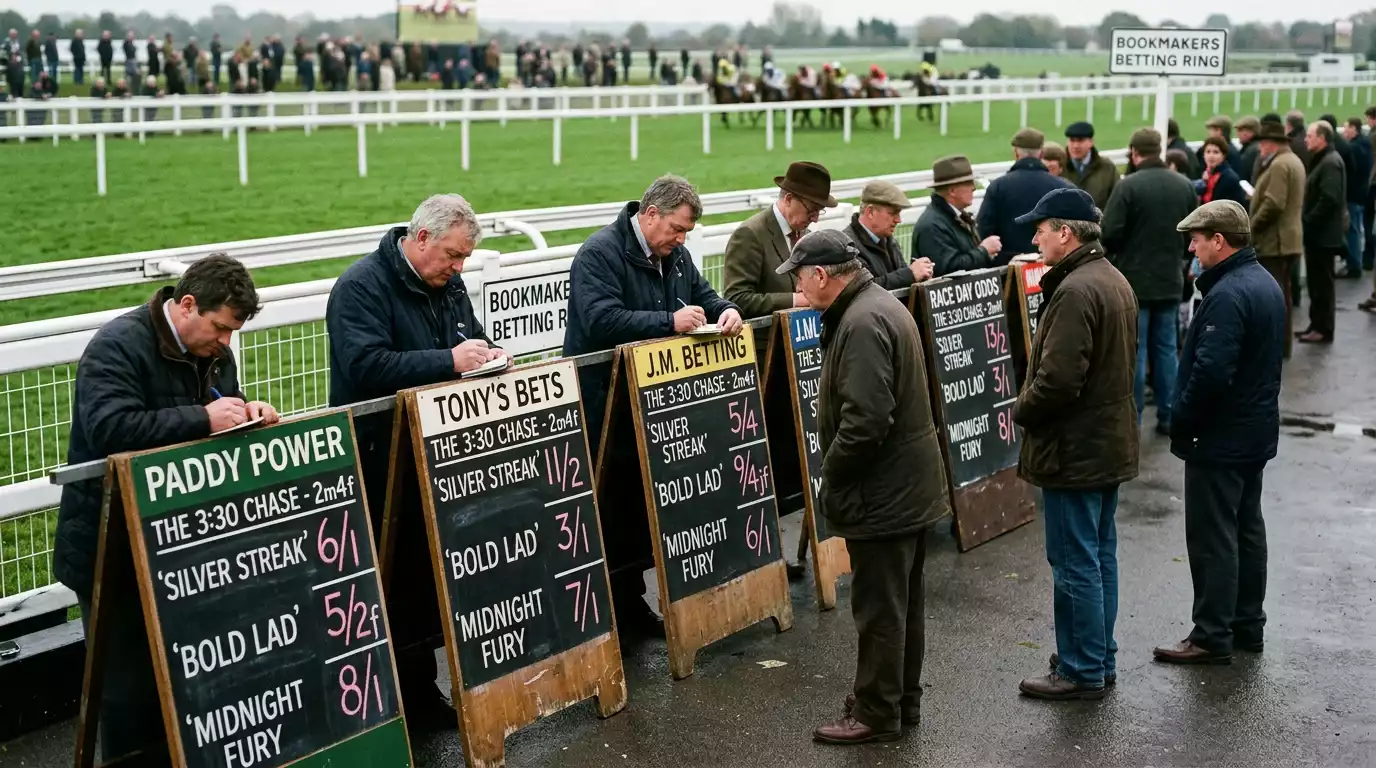
When the government announced the increase in remote gambling duty from 15% to 21%, the racing industry’s reaction was immediate and alarmed. I was at Kempton the afternoon the details were confirmed, and the mood in the owners’ and trainers’ bar was grim. Not because anyone in that room pays the tax directly — punters in the UK do not pay tax on winnings, and operators absorb the duty from their own margins — but because everyone in that room understood the second and third-order effects. A six-percentage-point increase in operator tax compresses the profits from which bookmakers fund everything that makes racing viable: promotions, sponsorship, enhanced place terms, and ultimately the levy that supports prize money.
The House of Commons Library estimates that the combined gambling tax reforms will generate 810 million pounds in additional government revenue in 2026/27, rising to 1.16 billion by 2030/31. That money comes from somewhere, and the “somewhere” is bookmakers’ operating margins — the same margins that determine how generously they can price place bets, how many extra places they can offer, and how much levy they generate for the sport.
See also: place bet horse racing for a complete guide to UK place betting.
What the 2026 Gambling Tax Reform Changed
The core change is the alignment of remote betting duty with Remote Gaming Duty at 21%, up from 15%. Remote betting covers all online bets placed with UK-licensed operators, including fixed-odds place bets, each-way bets and accumulator bets on horse racing. The increase applies to the operator, not the punter — your winnings are still tax-free.
Brant Dunshea, Chief Executive of the BHA, urged the Gambling Commission and government to consider whether the timing was right for this additional layer of regulation. Without a better solution, he argued, the illegal market will only grow, causing more harm, depriving the government of tens of millions in lost tax revenue, and sparking widespread job losses. That statement captures the central concern: a tax increase designed to raise revenue may inadvertently shrink the taxable base by pushing operators to cut costs, reduce promotions, or lose customers to the untaxed black market.
The reform also harmonises the treatment of betting and gaming, removing the historical distinction that taxed online casino at 21% but online betting at 15%. The policy logic is that both activities generate remote gambling revenue and should be taxed equally. The industry’s counterargument is that horse racing betting is fundamentally different from slots — it sustains a sport, an agricultural sector and 85,000 jobs through the levy system — and taxing it at the same rate as casino products ignores that structural contribution.
66 Million Pounds Cost Estimate: BHA’s Analysis of the First-Year Hit
The BHA’s economic analysis estimates that the duty increase will cost racing 66 million pounds in its first year and put 2,752 jobs at risk across the industry. That figure includes the direct impact on bookmaker profitability (which reduces levy yield), the indirect effect on sponsorship and media rights income, and the knock-on reduction in promotional spending — including the enhanced place terms and BOG programmes that place bettors rely on.
Racing currently generates approximately 300 million pounds in annual tax revenue for the government, alongside its 4 billion-plus economic contribution and 85,000 jobs. The industry argues that extracting an additional 66 million from the sector risks undermining the economic activity that produces far more in total government revenue than the duty increase will yield. Whether that argument influences future policy remains to be seen, but the first-year impact on the betting market is already visible in how operators are adjusting their business models.
The Grand National alone generates 60.2 million pounds for the Liverpool economy; Epsom Downs contributes 63.2 million annually to its surrounding area. The thoroughbred breeding sector adds 375 million and supports 21,000 jobs. These are not abstract economic contributions — they represent livelihoods and communities that depend on a racing industry funded in large part by the betting market. A tax increase that compresses that market has consequences well beyond the bookmakers’ balance sheets.
How Higher Tax Filters Through to Odds and Promotions
I track bookmaker promotional spending as a leading indicator of market conditions, and the early evidence post-reform is suggestive. Three of the five major operators I monitor have reduced the frequency of their enhanced place offers on midweek racing since the duty increase took effect. Feature races at major meetings are still receiving generous terms — the competitive pressure is too intense to pull back on the Grand National or Cheltenham — but the everyday Tuesday handicap at Catterick or Musselburgh is increasingly settling at standard terms only.
The mechanism is straightforward. Enhanced place terms cost the bookmaker money — every additional paid place is a potential payout that would not exist under standard rules. When the operator’s tax bill increases by six percentage points, the budget available for promotional payouts shrinks. The first casualties are the low-visibility, low-traffic promotions that attract minimal new custom. The last to go will be the flagship offers on the biggest races, where the marketing value justifies the cost even at higher tax rates.
For place bettors, this creates a two-tier market: generous terms on the 20 or 30 biggest race days of the year, and standard terms on everything else. If your place betting strategy depends on enhanced offers for everyday racing — and mine does, because that is where the volume sits — the duty increase forces an adjustment. You either concentrate activity on the meetings where enhanced terms survive, accept lower returns on standard-term races, or shift toward exchange place markets where the tax is not a direct factor in pricing.
At the 2026 Cheltenham Festival, bet365 still paid out over 50 million pounds through their BOG programme, demonstrating that the biggest operators have not abandoned premium promotions. But the number of races receiving enhanced place terms across the full UK calendar is trending downward, and the duty increase accelerates that trend. Place bettors who built their approach around a consistent supply of enhanced-term races need to adapt — or accept that the strategy’s expected return has compressed. The betting levy analysis explains how duty changes filter through to the levy income that ultimately funds the racing product.
See also: understand how place bet odds work before calculating your returns.
FAQ
Do UK punters pay tax on place bet winnings?
No. UK punters do not pay any tax on gambling winnings, including place bet winnings. The tax burden falls entirely on the operator through remote gambling duty, which increased from 15% to 21% in the 2026 reform. Your place bet returns are paid in full with no deduction for tax. This has been the case since the abolition of betting duty on punters in 2001.
Could higher gambling tax reduce the number of extra place promotions?
Yes, and the early evidence suggests it already is. Enhanced place terms cost bookmakers money, and a six-percentage-point increase in duty compresses the promotional budget. Feature races at major meetings are still receiving competitive enhanced terms, but everyday midweek racing has seen a reduction in the frequency and generosity of extra place offers since the reform took effect. The impact is gradual but directionally clear.
Created by the ”Place bet Horse Racing” editorial team.