Why Place Betting on the Grand National Needs Its Own Rulebook
 Available in US
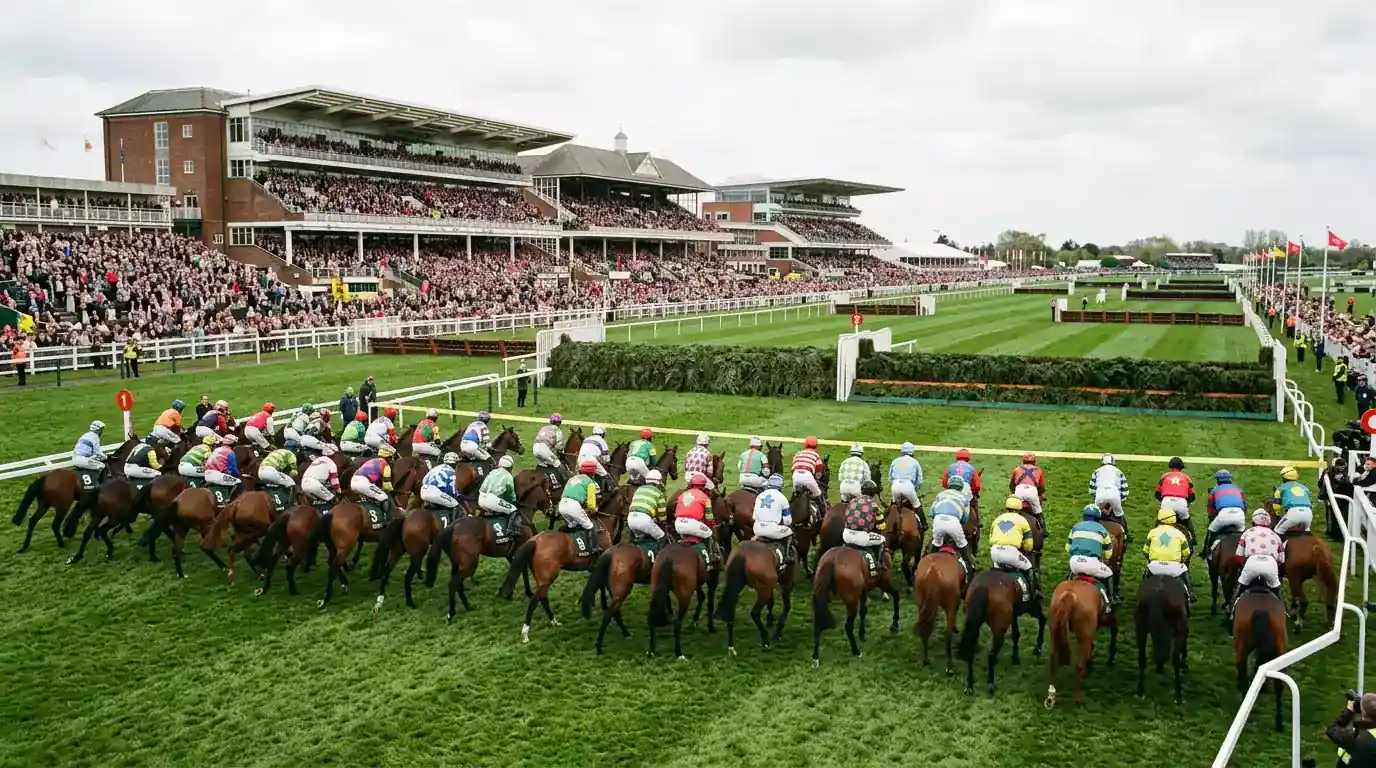
I once watched a 66/1 shot finish sixth in the Grand National and saw a mate collect nearly two hundred quid from a tenner stake. He had no idea six places were even paid on that race. Most punters don’t. The Grand National operates under a different set of assumptions to almost every other race on the British calendar, and if you bet on it the way you bet on a seven-runner novice chase at Warwick, you are leaving money on the table — or worse, misunderstanding what you have actually backed.
With 40 runners lining up at Aintree each April, the National sits in a bracket of its own. Standard industry place terms top out at four paid places for fields of 16 or more, but the sheer size of this field — and the commercial weight behind the race — pushes bookmakers to offer five, six, even seven places. Sky Bet went as far as seven paid places at 1/5 odds on the 2026 Grand National, the most generous terms any major operator offered that year. That single decision changed the value equation for every place bettor who noticed it.
This article breaks down the precise mechanics, shows you which bookmakers paid what in 2026, and walks through a full payout calculation so you can see exactly how the numbers land.
See also: place bet horse racing for Aintree and big-race place strategies.
Standard Place Terms for 40-Runner Grand National Fields
Every April I run through the same exercise: pull up the declared runners, count them, then check what terms each bookmaker is actually offering. For the Grand National, the count almost always lands at 40 — the maximum field size set by Aintree’s safety limits. Under the standard Tattersalls-derived framework used across the UK betting industry, any race with 16 or more runners pays four places. The fraction applied is typically 1/4 of the win odds for handicaps, and the National is classified as a handicap chase.
So the baseline — the minimum you should expect from any licensed bookmaker — is four paid places at 1/4 odds. That means if your horse finishes first, second, third or fourth, your place bet collects. The place odds are calculated by taking the win price and multiplying by 0.25. A horse priced at 20/1 to win would return 5/1 for a place under standard terms.
But here is the thing that trips people up: nobody actually offers just four places on the National. The race is too big, too commercial, and too heavily bet for any operator to stick with the bare minimum. The real question is not whether you get more than four places, but how many more and at what fraction. That is where the actual edge sits, and it shifts every year depending on which operator is chasing market share hardest.
The 40-runner field also introduces a statistical wrinkle worth noting. With that many runners, average field sizes across UK racing — 8.90 for Flat and 7.84 for Jumps in 2025 — look almost quaint by comparison. The National field is roughly five times the size of a typical jumps race, which means the probability of any single horse placing is compressed. More runners, more chaos at the fences, more scope for long-priced finishers to sneak into the frame. That compression is precisely why enhanced place terms matter so much here.
Which Bookmakers Offered 6 and 7 Places in 2026
I keep a spreadsheet. Every year before the National I log what each major operator is advertising, because the terms change annually and sometimes shift in the final 48 hours before the off. In 2026, the picture looked like this.
Sky Bet led the market with seven paid places at 1/5 odds — the widest terms any major bookmaker offered. Seven places on a 40-runner race means you are covering 17.5% of the field. The trade-off was the fraction: 1/5 rather than 1/4, which reduces each individual place payout. I will run the maths on whether that trade-off is worthwhile in the next section.
Several other operators — including bet365 and Paddy Power — offered six places, generally at 1/4 or 1/5 depending on the specific promotion. The bet365 approach in 2026 was notable because they paired their extra places with Best Odds Guaranteed, meaning the place odds could only go up from the price you took, not down. Across the Cheltenham Festival that same year, bet365 reportedly paid out over 50 million pounds through their BOG programme, and while the National is a single race, the principle carries over: BOG on place bets amplifies the value of enhanced terms.
At the other end, a handful of smaller operators stuck closer to five places. Still generous by standard terms, but visibly less competitive than the market leaders. The lesson I have learned over nine years of tracking this: the bookmaker offering the most places is not automatically offering the best value. You need to compare the total expected payout across the range of finishing positions, factoring in the fraction. Seven places at 1/5 can be worth less than six places at 1/4, depending on where in the field your horse finishes. I will show you exactly how in the worked example below.
One more detail that catches people out — these enhanced terms almost never apply to ante-post bets placed weeks or months before the race. The promotions typically kick in only when the final market opens, usually 24 to 48 hours before the off. If you backed a horse in February at 33/1 each-way, your place terms are whatever the bookmaker’s standard rules state, not the enhanced Grand National promotion. Check the small print. I cannot stress that enough.
Worked Payout: Finishing 5th at 25/1 With 7 Extra Places
Let me walk through a concrete scenario because abstract rules only get you so far. Imagine you have placed a 10 pound place-only bet on a horse priced at 25/1 to win the Grand National. Your bookmaker is offering seven places at 1/5 odds.
Step one: calculate the place odds. Take the win odds of 25/1 and multiply by the fraction (1/5). That gives you 5/1 for the place. In decimal terms, that is 6.0 (5 plus your stake returned).
Step two: calculate the payout. Your stake is 10 pounds, so the return is 10 multiplied by 6.0 = 60 pounds. That includes your original stake, so your profit is 50 pounds.
Now compare that to the same horse, same price, but with a bookmaker offering six places at 1/4 odds. The place odds become 25/1 multiplied by 1/4 = 6.25/1, or 7.25 in decimal. A 10 pound bet returns 72.50 pounds — profit of 62.50.
So here is the critical insight: if your horse finishes fifth, both bookmakers pay out. But the 1/4 fraction operator pays you 12.50 more on a tenner bet. The seventh place at Sky Bet only helps you if your horse finishes seventh — a position the other bookmaker does not cover at all. The question becomes: is the additional coverage of a seventh finishing position worth the reduced payout on positions one through six?
For a 40-runner field, the probability of any given horse finishing exactly seventh is roughly 2.5% in a truly random model. The probability of finishing in positions one through six is roughly 15%. So you are trading a meaningful reduction in payout across 15% probability space for additional coverage of a 2.5% outcome. The maths depends on the specific horse, the field, and your risk appetite, but as a general principle, I lean towards the higher fraction when both operators cover at least six places. The seventh place is a bonus, not a strategy.
That said, for genuine outsiders — 50/1 or longer — the calculus shifts. At those odds, the difference between 1/4 and 1/5 fractions is larger in absolute terms, but the horse is less likely to finish in the top six anyway. If you are betting longshots, the extra place at a reduced fraction can be the more rational choice because you are already operating in low-probability territory where any payout is a win. There is a fuller breakdown of how extra places work across UK racing if you want the broader picture beyond the National.
See also: make sure you know the fundamentals in our place bet rules UK guide.
FAQ
Is a place bet on the Grand National settled at 1/4 or 1/5 odds?
Under standard industry terms, the Grand National as a handicap with 16+ runners pays at 1/4 of the win odds. However, most major bookmakers run enhanced promotions with 1/5 odds in exchange for additional paid places — sometimes up to seven. The fraction depends entirely on which operator you use and whether you qualify for their promotion.
Do Grand National extra places apply to ante-post bets?
In most cases, no. Enhanced place terms for the Grand National typically apply only to bets placed once the final market opens, usually 24 to 48 hours before the race. Ante-post bets placed weeks or months earlier are normally settled under the bookmaker’s standard place terms. Always check the specific promotion rules before assuming your early bet qualifies.
Written by the editors at Place bet Horse Racing.