Extra Places Turn Losing Bets Into Payouts — Here Is How
 Available in US
Extra Places Turn Losing Bets Into Payouts — Here Is How
Cheltenham Festival, 2025. I had a 10 each-way on a 20/1 shot in the County Hurdle. The horse ran a blinder, travelled well through the field, and finished fifth. Under standard place terms for a handicap with more than 16 runners, four places are paid. My horse was fifth. Dead money. Except the bookmaker I used was running an extra places promotion that week, paying six places instead of four. That fifth-place finish turned a losing bet into a place return of 20/4 — 5/1 — on my place stake. The win half was gone, but the place half paid out 50 on a 5 stake. The bet went from a total loss of 10 to a net profit of 40, and I did absolutely nothing different except choose the right operator before the race.
Extra places are one of the most powerful structural advantages available to UK horse racing bettors, and they are hiding in plain sight. The concept is simple: a bookmaker extends the standard number of paid places for a specific race, paying out on finishers who would not normally qualify for a place return. Instead of three places in an eight-runner race, a promotion might pay four. Instead of four places in a 16-runner handicap, six or even seven. The win odds stay the same. The place fraction stays the same. The only thing that changes is how many finishing positions trigger a payout.
The scale of these promotions is not trivial. Major operators pay out tens of millions in enhanced place returns across a single festival meeting. UK remote horse racing generated 766.7 million pounds in gross gambling yield in the year to March 2025, and a meaningful slice of the promotional spend that operators allocate against that revenue flows directly into enhanced place terms. The bettors who understand how to evaluate these offers gain an edge that compounds across every meeting where they apply.
This guide breaks down how extra places work, how the major operators structure their offers, and — critically — how to calculate whether an extra places promotion actually adds value to your bet or just looks good in the marketing copy.
See also: place bet horse racing for extra places and enhanced terms.
Standard Place Terms vs Enhanced: What Bookmakers Actually Change
Before you can spot value in extra places, you need to know the baseline you are measuring against. Standard UK place terms follow a rigid structure tied to field size. Races with two to four runners pay one place only — the winner. Five to seven runners: first and second at 1/4 odds. Eight or more runners in non-handicaps: first, second and third at 1/4 odds. Handicaps with 16 or more runners: first, second, third and fourth at 1/5 odds. These are the industry defaults, and they have remained essentially unchanged for decades.
When a bookmaker advertises “extra places” on a race, they are changing one or both of two variables. The first — and most common — is the number of places paid. A 12-runner handicap that normally pays three places might pay four or five under the promotion. The second variable, which gets less attention but matters enormously, is the place fraction. Some operators enhance the number of places but reduce the fraction from 1/4 to 1/5, or even lower. The headline says “six places paid” but the fine print says the fraction dropped from 1/4 to 1/5, which cuts the payout per place finish by 20%.
Think of it as two dials on a mixing desk. One dial controls how many places pay out. The other controls how much each place pays. The best promotions turn the first dial up without touching the second. The worst promotions turn the first dial up and quietly turn the second one down. Understanding which dial has moved — and by how much — is the difference between exploiting a genuine edge and falling for packaging.
The structural reason bookmakers offer extra places is volume. A race with enhanced place terms attracts more each-way bets, and each-way bets are two bets — the win half generates revenue regardless of whether the place half pays out on an extra position. The bookmaker’s margin on the win portion of thousands of additional each-way bets more than covers the cost of paying out a few extra place finishes. It is rational generosity. They are not losing money. They are buying customers with a promotion that sounds more expensive than it is.
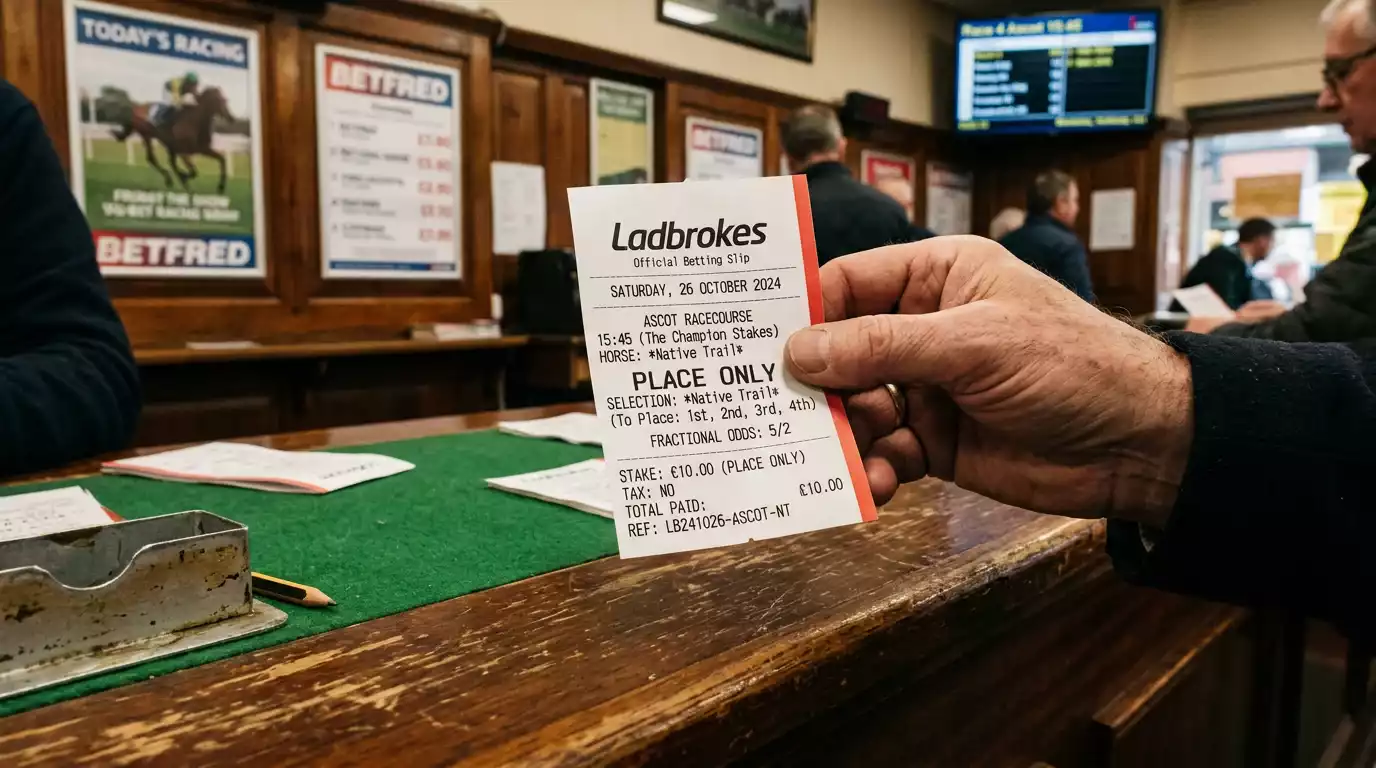
One detail that catches new bettors off guard: extra places almost always apply to each-way bets, not standalone place bets. If you place a bet on a horse to place only — without the win component — the enhanced terms may not apply. The reason is commercial. Bookmakers want the win half of your each-way wager because that is where their margin sits. A place-only bet at enhanced terms without the accompanying win stake is pure cost to the operator, which is why most promotions quietly exclude it in the terms and conditions.
2026 Extra Places by Bookmaker: Sky Bet, bet365 and Rivals
I track extra places promotions the way some people track airline sales — daily, across multiple operators, with a spreadsheet that logs the race, the standard terms, the enhanced terms and the fraction applied. After three years of this, clear patterns emerge. Every major UK bookmaker uses extra places differently, and those differences matter far more than the marketing language suggests.
Sky Bet has positioned itself as the most aggressive extra places operator in the UK market. Their Cheltenham Festival promotion in 2026 paid out approximately 10 million in enhanced place returns — a figure they publicised heavily and which reflects both the volume of each-way bets they attract and the generosity of their enhancements. Sky Bet typically offers extra places on the day’s biggest race at major meetings, extending from the standard three or four places to five, six or sometimes seven. Crucially, they tend to maintain the standard place fraction rather than reducing it, which makes their enhancements among the most structurally valuable in the market.
bet365 approaches extra places differently. Their strength lies in best odds guaranteed — they paid out over 50 million in BOG at the 2026 Cheltenham Festival alone — and their extra places offers tend to appear on selected handicaps rather than every feature race. The BOG guarantee compounds with extra places when a horse drifts in price between the time you place the bet and the off: you get the higher odds and the enhanced place terms simultaneously. That combination is rare and valuable when it aligns.
Other operators rotate their extra places offers. Some run them on Saturday feature races only. Some restrict them to specific race types — handicaps, or races with a minimum field size. Some apply extra places only to new customer accounts for a limited period. The variation is wide enough that no single operator dominates across all scenarios, which is why checking multiple bookmaker offers before placing an each-way bet on a big race is not optional — it is where the edge lives.
A practical habit: on the morning of a major race day, open three or four bookmaker apps and compare the place terms for each race. The differences can be stark. One operator might pay four places on a 14-runner handicap while another pays six. The horse you back might finish fifth. That is either a loss or a payout, depending on which app you opened first. The five minutes spent comparing is the highest-value activity in the entire place betting process.
Grand National: A Case Study in Extra Places
The Grand National is the single most bet-on race in the British calendar, and the extra places competition among bookmakers reaches its peak here. The race typically features 40 runners over four miles and two furlongs — the longest and largest field of the year. Standard place terms for a handicap with 16 or more runners pay four places at 1/5 odds. For the National, most major operators extend that to six, seven or even eight places. Some have gone as far as 10 in recent years.
The maths becomes interesting at that scale. In a 40-runner field, the probability of any given horse finishing in the first eight is roughly double the probability of finishing in the first four. An 8/1 shot that places under standard terms returns 8/5 on the place stake. Under an eight-place promotion at the same fraction, that horse has twice as many finishing positions to land in while the payout per position remains the same. The expected value of the place portion of an each-way bet increases significantly — in some cases enough to turn a negative-EV each-way bet into a positive one purely on the strength of the enhanced terms.
The National is also the race where fraction reductions are most common. Watch for promotions that advertise eight places but reduce the fraction to 1/6 or even 1/8. At 1/6 odds, an 8/1 shot places for just 8/6 (roughly 1.33/1) — a meaningful reduction from the 8/5 you would get at the standard 1/5 fraction. Always read the terms, not just the headline.
Cheltenham Festival: How Enhanced Offers Scale With the Card
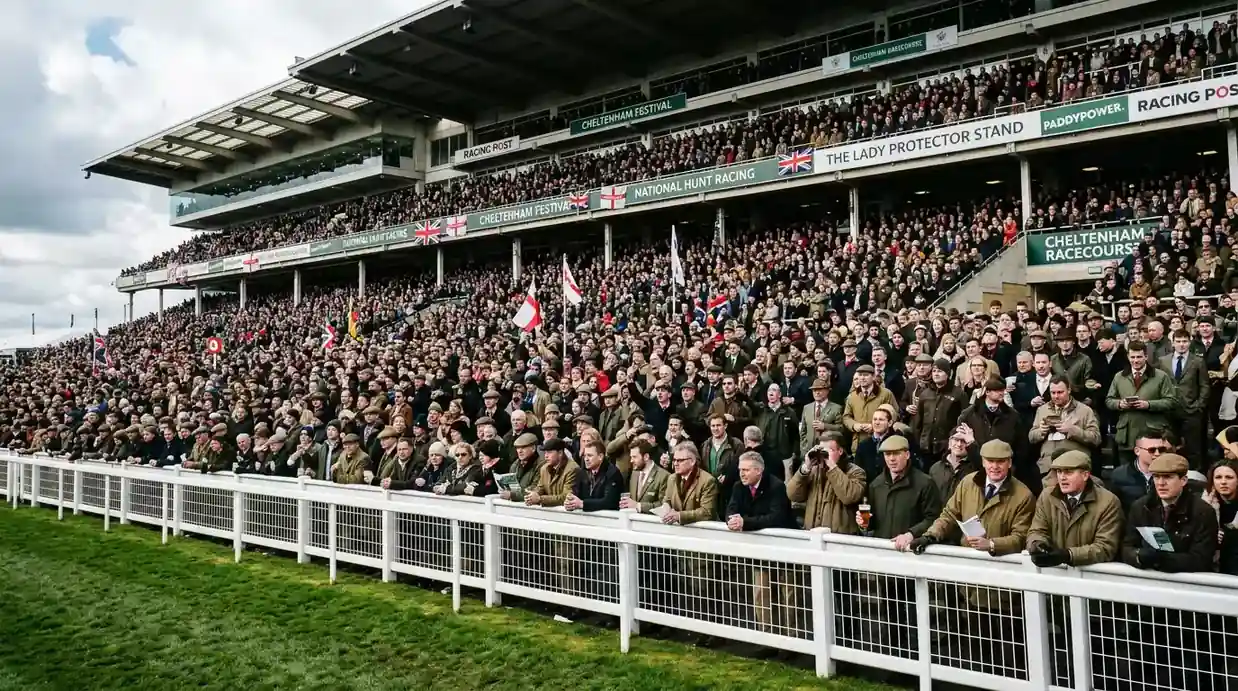
Cheltenham is where extra places promotions operate at industrial scale. Four days, 28 races, and nearly every major bookmaker offering enhanced terms on multiple races per day. The festival handicaps — the County Hurdle, the Martin Pipe, the Grand Annual — routinely draw fields of 20 or more runners, which means standard terms already pay four places. Operators extend these to five, six or seven, creating a situation where roughly one in three or four runners finishes in a paid place position.
The pattern across the festival is predictable. Feature championship races — the Gold Cup, the Champion Hurdle, the Champion Chase — draw smaller fields of 8 to 14 runners. Extra places on these races typically add one position, moving from three paid places to four. The value add is modest. The big handicaps are where the real action sits. A 24-runner handicap with seven paid places means nearly 30% of the field collects a place return. If you are backing a mid-range horse at 12/1 to 20/1, the probability of a place finish under those terms is materially higher than the place odds imply.
I allocate a larger share of my annual place betting bankroll to the Cheltenham Festival than to any other meeting. The combination of large fields, extended place terms and competitive pricing across bookmakers creates a four-day window where the structural conditions for place betting are at their annual best.
One tactical note on festival timing: the enhanced terms are typically confirmed the morning of each race day, not in advance. Operators watch what their rivals announce and adjust their own offers in response. Checking terms at 8am and again at 11am can reveal additional enhancements that were not live at breakfast. The arms race between bookmakers benefits the bettor who checks late rather than early.
Are Extra Places Worth It? A Quantitative Check
Here is the uncomfortable truth about extra places: not all of them add value. Some are marketing wrappers around terms that barely shift the expected return of your bet. The only way to know whether an extra places promotion is worth acting on is to run the numbers, and the numbers require exactly three inputs: the standard number of places, the enhanced number of places, and the place fraction under each set of terms.
Take a concrete example. A 14-runner handicap pays three places at 1/4 odds under standard terms. An operator offers five places at 1/4 odds. You are backing a horse at 10/1. The place return under both standard and enhanced terms is 10/4 = 5/2. The only thing that changes is the number of finishing positions that pay out — from three to five. In a 14-runner race, the probability of finishing in the first three is roughly 21% for a randomly selected horse. The probability of finishing in the first five is roughly 36%. Your payout per place finish has not changed, but the probability of collecting has increased by about 71%. That is genuine, significant value.
Now change one detail. The operator offers five places but reduces the fraction to 1/8. Your place return drops from 5/2 to 10/8 = 5/4. The probability of placing increased by 71%, but the payout per place finish dropped by 50%. You need to weigh the higher frequency against the lower return. In this case, the expected value of the enhanced terms (36% chance of winning 1.25 units minus 64% chance of losing 1 unit) is 0.45 – 0.64 = -0.19 units per bet. Under the standard terms (21% chance of winning 2.5 units minus 79% chance of losing 1 unit) it is 0.525 – 0.79 = -0.265. The extra places are still better than the standard terms, but the margin is smaller than the headline suggests.
The general rule: extra places promotions add the most value when the fraction stays the same and the number of additional places is large relative to the standard. Going from four to seven places at the same fraction is transformative. Going from three to four places with a reduced fraction is marginal. I only adjust my betting behaviour for promotions that clear a minimum threshold — at least two additional places with no fraction reduction, or three additional places with a fraction reduction of no more than one step (from 1/4 to 1/5). Anything less than that is noise dressed up as signal.
For a deeper understanding of how place terms interact with field size and race type, the fractions and thresholds detailed there provide the baseline every extra places calculation depends on.
Fine Print Traps: Fraction Reductions and Excluded Markets
I learned this one the hard way. A few years ago I backed a horse each way in a big Saturday handicap, drawn in by a “seven places paid” headline on the operator’s app. The horse finished sixth. I went to check my account expecting a payout and found nothing. The promotion applied only to bets placed at starting price, and I had taken early odds. The terms were buried three clicks deep in a pop-up I had dismissed without reading. Seven places paid — just not for me.
Fraction reductions are the most common trap. An operator advertises six places on a race where four is standard. The headline looks generous. But the fraction has dropped from 1/4 to 1/5, which means each place finish returns 20% less. On a 12/1 shot, the difference is between a place return of 3/1 (at 1/4) and 12/5 (at 1/5). Over a season of place betting, those percentage points compound into meaningful lost revenue.
Other restrictions to watch for: minimum odds requirements (your horse must be priced at 3/1 or longer to qualify), bet type restrictions (place only bets excluded, each way only), and market timing limits (ante-post bets excluded, or only bets placed on the day of the race). Some promotions apply only to the first bet you place on the race, which penalises bettors who like to split their each-way stake across multiple selections.
The most insidious restriction is the one that excludes named markets. Some operators offer extra places on “all UK horse racing” but quietly exclude the biggest meetings — Cheltenham, Aintree, Royal Ascot — where extra places would be most valuable. Others reverse the approach: extra places on festival races only, with no enhancement on regular midweek cards. Neither is inherently worse, but you need to know which version you are working with before the race, not after.
My checklist before acting on any extra places promotion: How many additional places? What fraction? Any minimum odds? Which bet types qualify? Is my horse’s race actually included? Those five questions take 30 seconds to answer and save the frustration of a non-paying sixth-place finish on a horse you thought was covered. Alan Delmonte at the HBLB has described the bookmaker industry as one where “gross profits from racing” fund the entire ecosystem — and part of how those profits are protected is through promotional terms that look better than they are.
See also: build a complete approach with our place bet strategy overview.
FAQ
What are extra places in horse racing betting?
Extra places are bookmaker promotions that increase the number of finishing positions that qualify for a place payout. Under standard terms, a race with eight or more runners pays three places. An extra places promotion might pay four, five or more places on the same race, giving your bet additional finishing positions to land in while maintaining the same place odds fraction.
Do all bookmakers offer the same extra places on the same races?
No. Extra places offers vary significantly between operators. One bookmaker might pay five places on a handicap while another pays seven on the same race. The fraction applied can also differ. Comparing terms across multiple bookmakers before placing an each-way bet on a big race is one of the most effective habits a place bettor can develop.
Can extra places turn a losing bet into a winner?
Yes. If your horse finishes in a position covered by the enhanced terms but not by the standard terms, the place portion of your each-way bet pays out when it otherwise would not. On a 20/1 shot, that place payout at 1/4 odds returns 5/1 on your place stake — enough to cover the lost win stake and generate a net profit from a horse that did not win.
Are extra places promotions available on every race?
No. Operators typically restrict extra places to selected races, usually the biggest events on the card or races at major festival meetings like Cheltenham, Aintree and Royal Ascot. Midweek racing at smaller tracks rarely attracts enhanced place terms. The Grand National and Cheltenham Festival are the two fixtures where extra places promotions are most widespread and most generous.
Created by the ”Place bet Horse Racing” editorial team.