You Can Strip Out the Win Half and Bet Purely on a Place Finish
 Available in US
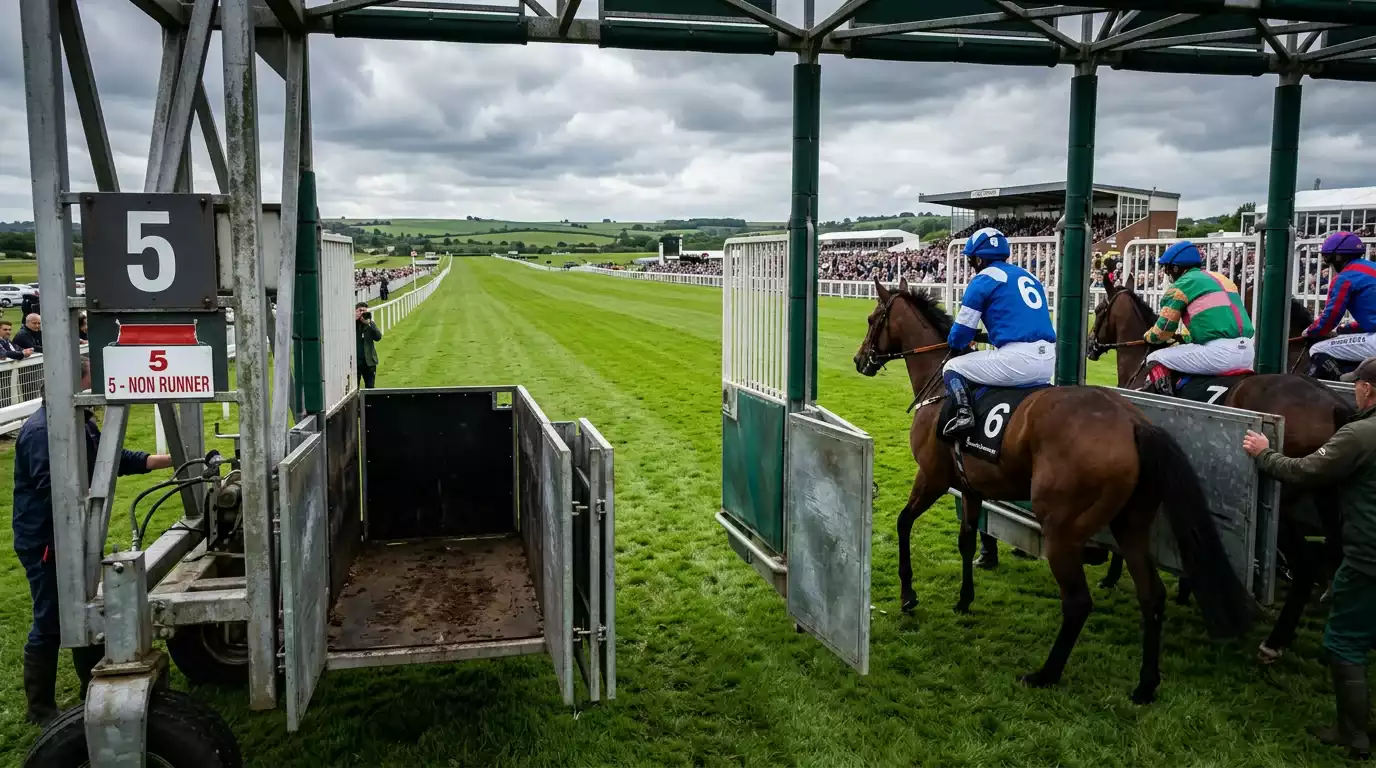
It took me two full seasons of each-way betting before I realised I was paying for a win bet I did not want. Every each-way bet is two bets: one on the horse to win, one on the horse to place. If your horse finishes third at 14/1, the win half loses and the place half pays 7/2. You collect on one leg and lose on the other. But you staked on both. The place-only bet eliminates the losing half — one bet, one outcome, one stake. For horses you believe will place but not win, the maths is cleaner and the return on capital is higher.
Place-only betting is not a new product, but it remains underused relative to each-way. Many punters default to each-way because it is the option they learned first, and the double-stake structure is so familiar that questioning it feels counterintuitive. But the question is worth asking on every bet: do I genuinely think this horse can win, or am I betting each-way because the place part is what I actually want? If the answer is the latter, you are burning half your stake on a leg with a low probability of success. Place-only fixes that.
See also: place bet horse racing for place-only and standalone place tips.
How to Place a Place-Only Bet With a Bookmaker
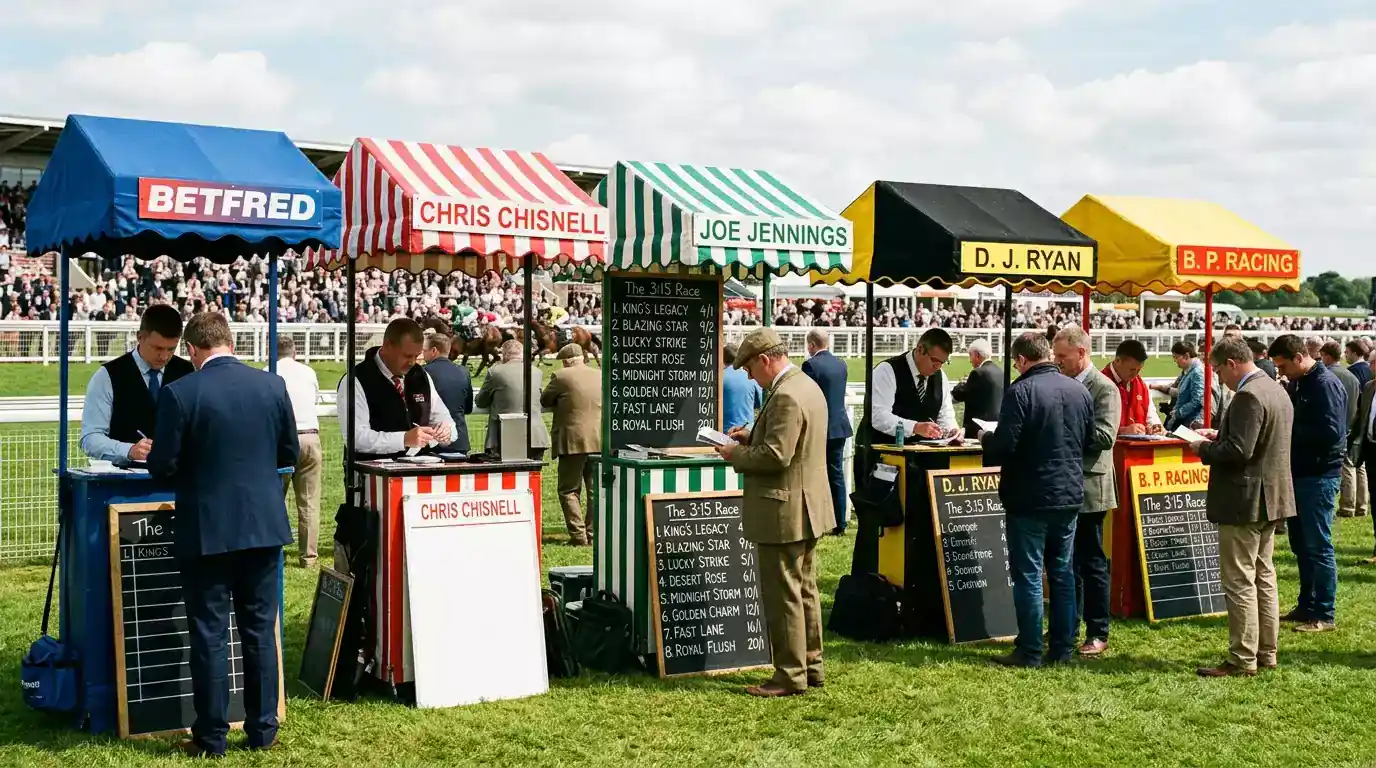
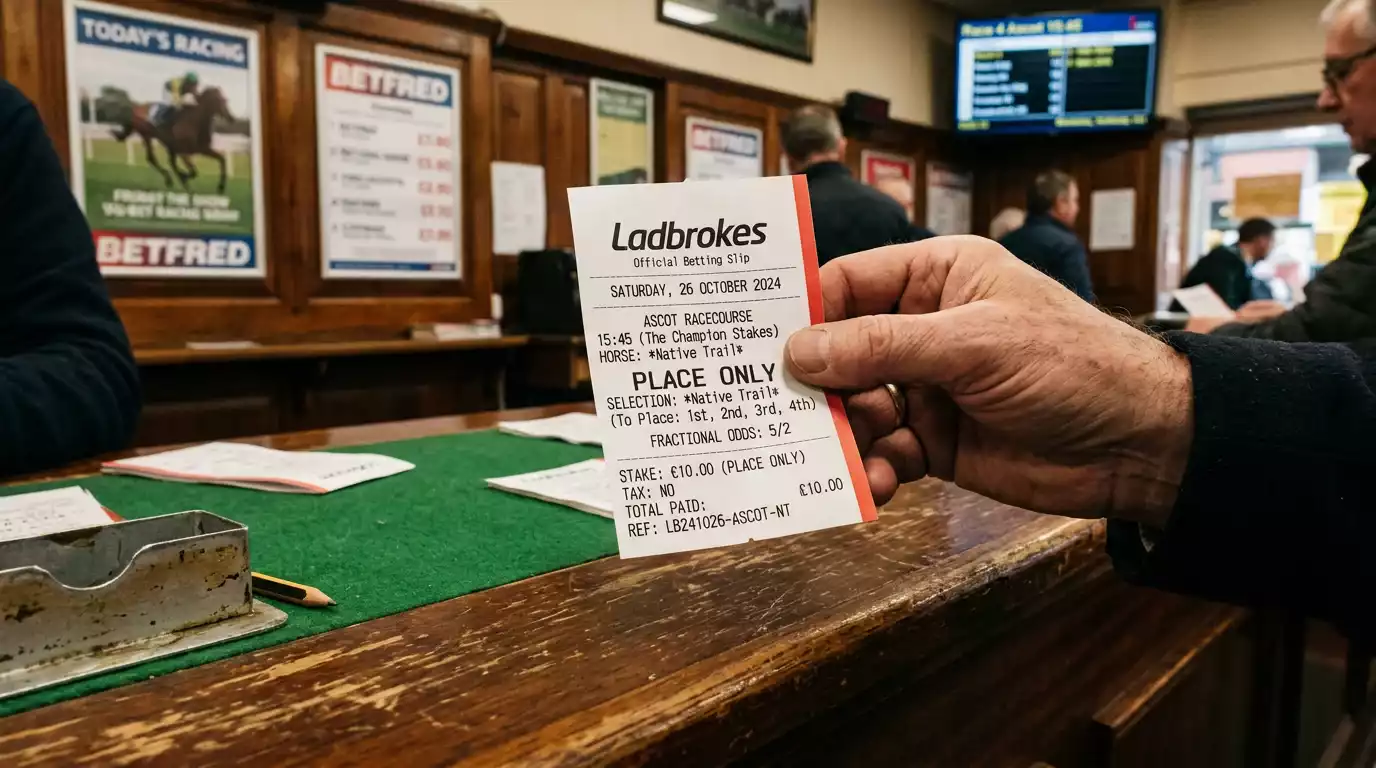
The mechanics vary by operator, but the process is available with most major UK bookmakers either through their apps or their websites. You select a horse, and instead of choosing “win” or “each-way,” you select “place” or “place only” as the bet type. Your single stake goes entirely on the horse to finish in the places — top three in most races, top four in 16+ runner handicaps.
The place odds are derived from the win odds using the place fraction. If the win odds are 12/1 and the place fraction is 1/4, your place odds are 3/1. A 10-pound place-only bet returns 40 pounds if the horse places. The same outcome on a 10-pound each-way bet (which costs 20 pounds total because it is two bets of 10 pounds) returns the same 40 on the place half, minus the 10-pound loss on the win half, for a net return of 30 from a 20-pound outlay. The place-only bettor invested 10 and made 30 profit. The each-way bettor invested 20 and made 10 profit. Same horse, same race, same place finish — different returns on capital.
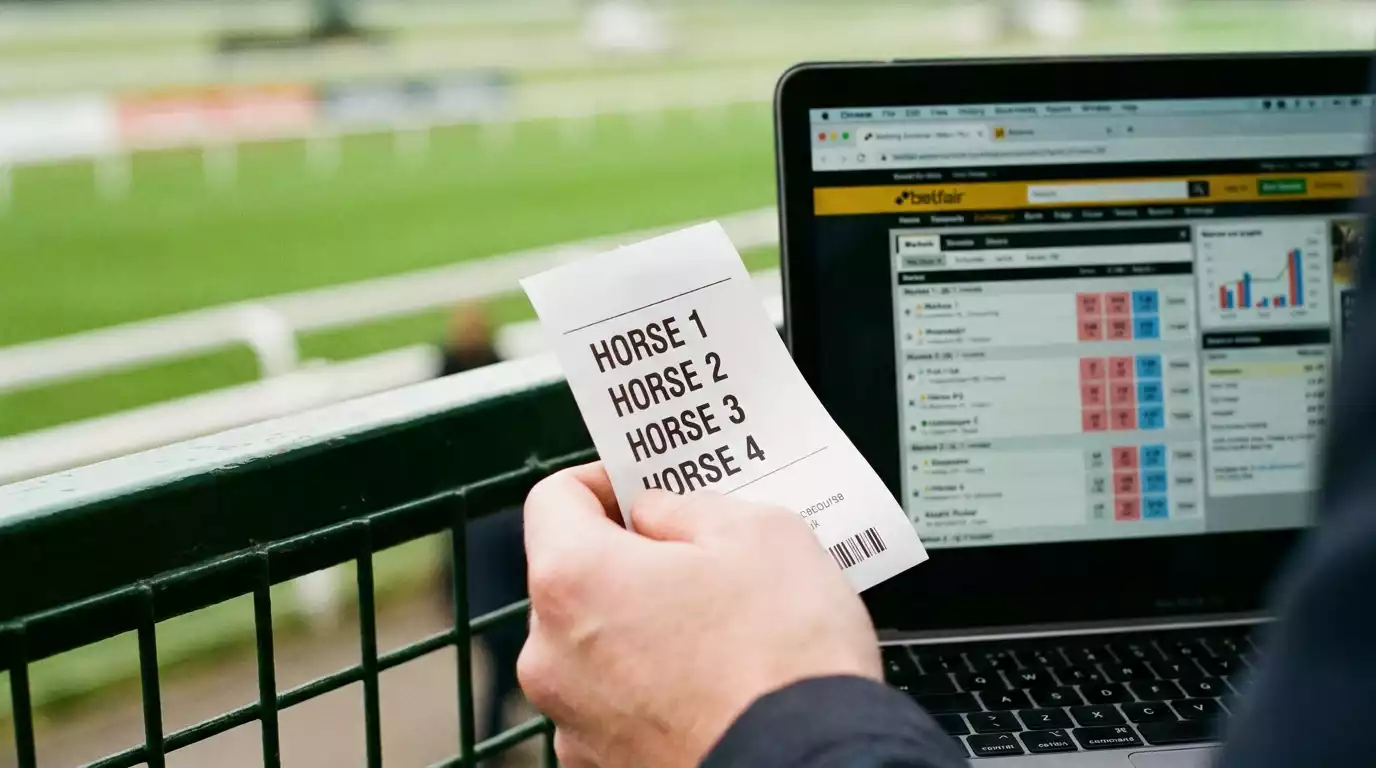
Not every bookmaker makes the place-only option equally visible. Some bury it in the bet slip options. Others offer it only on selected race types or only when the field has eight or more runners. On the betting exchanges, place-only betting is the default in the dedicated place market — you back or lay a horse to place, full stop, with no win component attached. Average Flat field sizes at 8.90 runners mean that the place market is active on the vast majority of UK races, though liquidity varies depending on the profile of the meeting.
When Place-Only Is Better Than Each-Way
The decision between place-only and each-way is not a philosophical debate — it is a calculation. The answer depends on three variables: the horse’s probability of winning, the horse’s probability of placing without winning, and the odds.
Place-only is the stronger bet when the horse has a high probability of placing but a low probability of winning. This describes a specific type of horse: the consistent performer that finishes in the top three or four regularly but rarely wins. These horses are common in UK handicaps — they are well handicapped enough to be competitive but either lack the class or the tactical speed to win. Their place strike rate might be 50-60%, while their win strike rate is 10-15%. Each-way wastes half the stake on the 10-15% win probability; place-only puts the full stake on the 50-60% place probability.
Each-way is the stronger bet when the horse has a genuine winning chance. If you believe a horse has a 25% probability of winning and a 65% probability of placing, the win half of the each-way bet carries meaningful expected value and the double-stake structure makes sense. The win leg is not dead money — it is an underpriced bet on a plausible outcome.
I use a simple threshold: if I rate a horse’s win probability below 15%, I bet place-only. Between 15% and 25%, I assess the odds and decide case by case. Above 25%, I bet each-way or win-only depending on the specific price. That threshold is not sacred, but it has produced better returns since I adopted it than the blanket each-way approach I used previously.
Place-Only on the Exchanges vs Fixed Odds
Betting exchanges offer a dedicated place market where you back or lay a horse to place. The odds in this market are set by supply and demand, not derived from the win odds using a fraction. This distinction matters because exchange place odds can differ — sometimes significantly — from the fixed-odds equivalent.
In my experience, exchange place odds on favourites tend to be shorter than fixed-odds equivalents (because the public backs favourites heavily in the place market), while exchange place odds on mid-range horses (8/1 to 16/1 win odds) tend to be longer. The gap is inconsistent — it depends on the race, the day, the liquidity — but when it appears, it creates a straightforward value opportunity: back the mid-range horse on the exchange place market at a price longer than the bookmaker offers, or back the favourite with the bookmaker where the fixed-odds place price is effectively shorter than the exchange.
The exchange also allows you to lay a horse to place — betting against it finishing in the frame. This is not possible with fixed-odds bookmakers except through specific markets (place insurance, etc.) that do not replicate true lay betting. Place laying is a niche strategy, but it has applications: if you believe a short-priced favourite will underperform in a competitive handicap, laying it to place on the exchange gives you a bet with a probability above 40% at odds of 2.0 or higher, which is hard to find elsewhere in racing.
The liquidity limitation is the main drawback. Exchange place markets at midweek meetings can be thin, with wide spreads and low available volumes. The major meetings produce deeper markets, but even at Cheltenham, the place market on an outsider may only have a few hundred pounds matched. If your staking is above 50 pounds per bet, you may find execution difficult in all but the most liquid markets. The structural comparison between place-only, each-way and win betting is developed fully in the each-way versus place-only guide, which maps out the expected value of each approach across different horse profiles.
See also: find the right platform with our best bookmakers for place betting review.
FAQ
Do all UK bookmakers let me bet place only without selecting each-way?
Most major UK bookmakers offer a place-only option, but the visibility and availability vary. Some operators include a dedicated ‘place’ button on the bet slip; others require you to navigate to the place market within the race card. On betting exchanges, the place market is a standalone product and is always available when the race meets the minimum field size requirements. If you cannot find the place-only option on your preferred bookmaker’s app, try the desktop site or contact their support.
Are place-only odds different from the place part of an each-way bet?
With fixed-odds bookmakers, the place-only odds are typically identical to the place component of an each-way bet — both are calculated as the win odds multiplied by the place fraction. On the exchanges, the place market is priced independently by supply and demand, so exchange place odds can differ from the fixed-odds equivalent. The exchange price may be longer or shorter than the bookmaker price depending on the weight of money in both markets.
Published by the Place bet Horse Racing team.