Four Days, 28 Races — How Place Terms Shift at Cheltenham
 Available in US
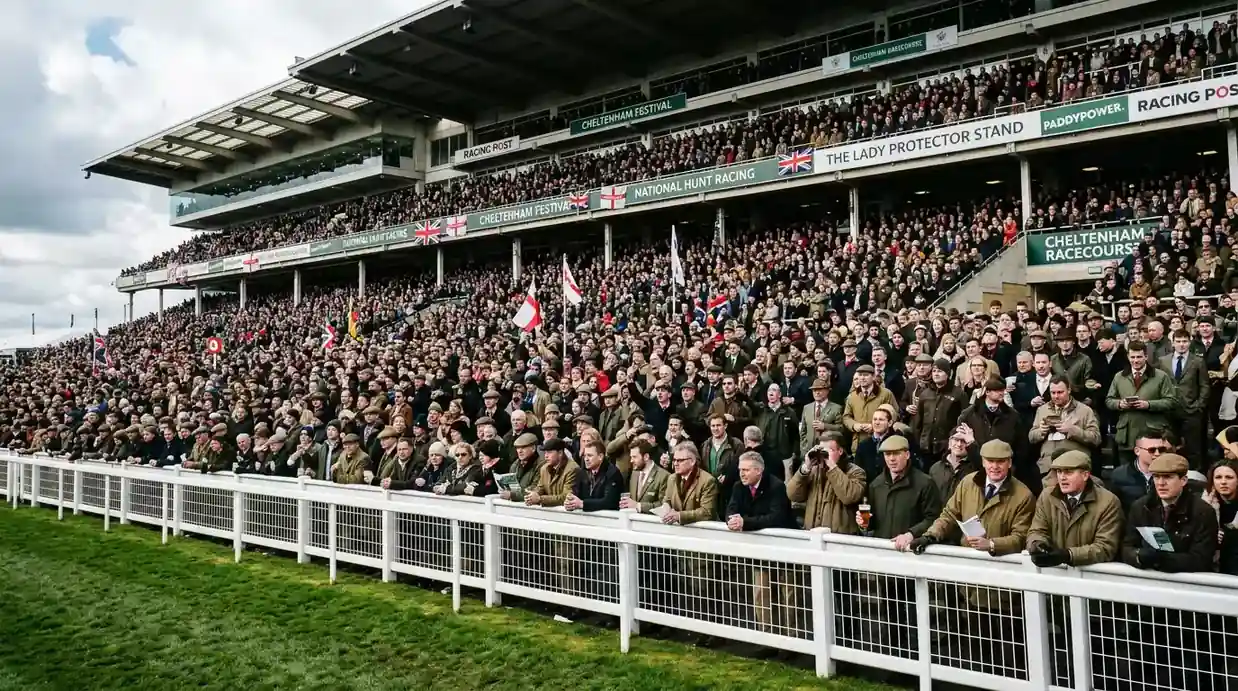
The first time I seriously tracked place terms across a full Cheltenham Festival, I made a spreadsheet with 28 rows and realised I had been making the same lazy assumption for years: that the terms were identical for every race. They are not. Not even close. A Champion Hurdle with eight runners pays three places. A Coral Cup with 24 runners pays four. A County Hurdle on the final day might attract enough entries to push bookmakers into offering five or six places through enhanced promotions. Each race on the card operates under its own set of rules, and if you treat them all the same, your expected returns are built on a fiction.
Cheltenham condenses the entire spectrum of place betting into four days of racing in the Cotswolds. Championship races draw small, elite fields where place terms are tight. Handicaps pull in big, open fields where four places are standard and extra places become a genuine differentiator. The 2026 Festival saw bet365 pay out over 50 million pounds through their Best Odds Guaranteed programme across the meeting — a figure that gives you some idea of the commercial scale involved. Getting place terms right across the card is not a marginal exercise. It is the difference between a profitable week and a frustrating one.
See also: place bet horse racing for festival and big-race previews.
Place Terms by Race Type: Championship vs Handicap at the Festival
I split every Cheltenham race into two buckets before the week starts, and I have done this every year since 2019. Championship races — the Champion Hurdle, Champion Chase, Stayers’ Hurdle, Gold Cup and their supporting Grade 1 events — tend to attract fields of 6 to 12 runners. At that size, you are looking at two or three paid places under standard terms. Two places for fields of 5 to 7 runners, three for 8 and above. The fraction is typically 1/4 of the win odds.
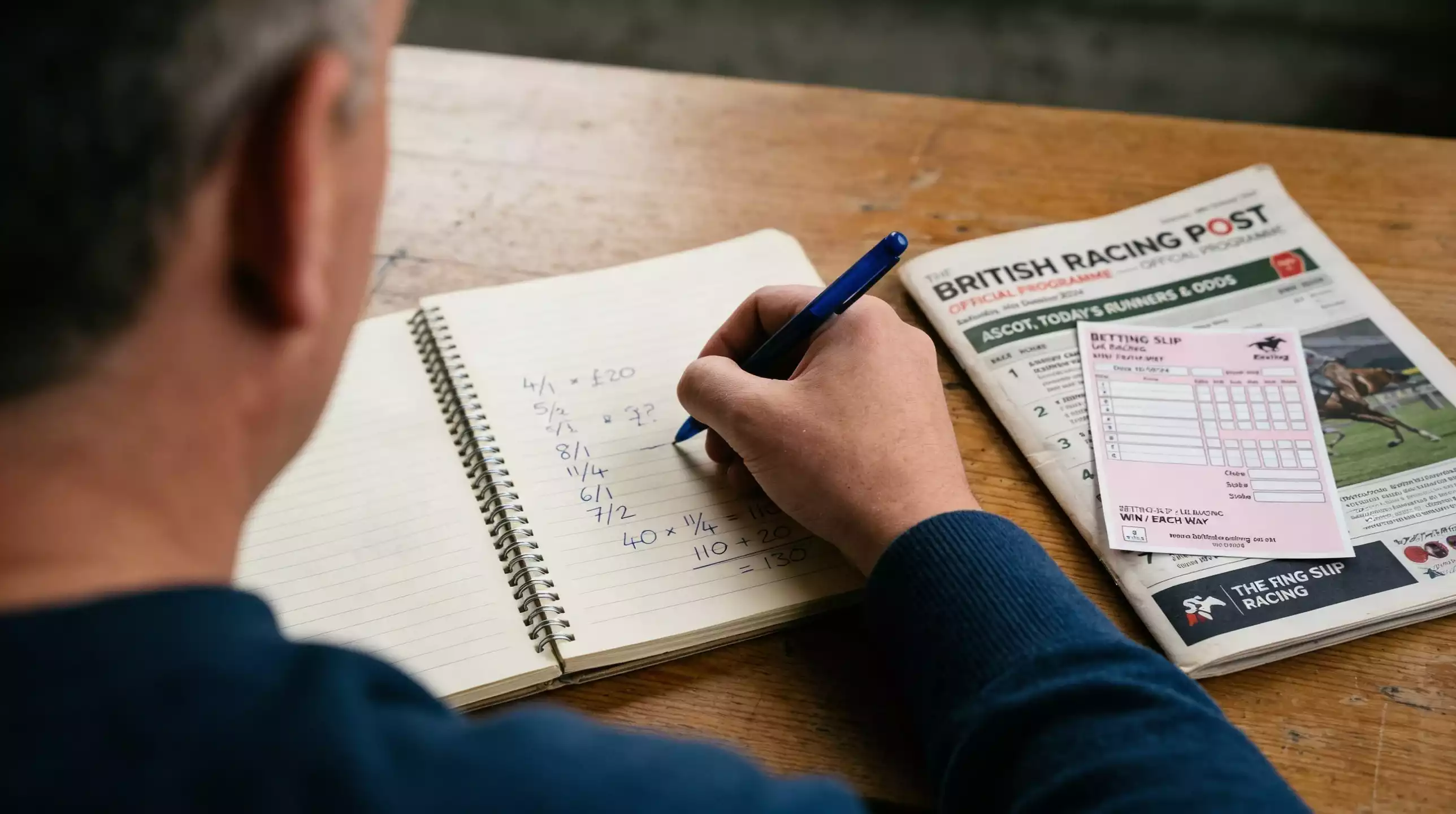
These are races where the market is dominated by short-priced principals. When a Champion Hurdle favourite goes off at 6/4, your place odds at 1/4 fraction are just 3/8 — barely enough to return your stake with profit. Place betting on championship races at Cheltenham requires a fundamentally different approach to place betting on handicaps. You are not looking for value in the favourite’s place price. You are looking for a horse at 8/1 or longer that has a realistic chance of finishing in the frame, where the place return actually justifies the risk.
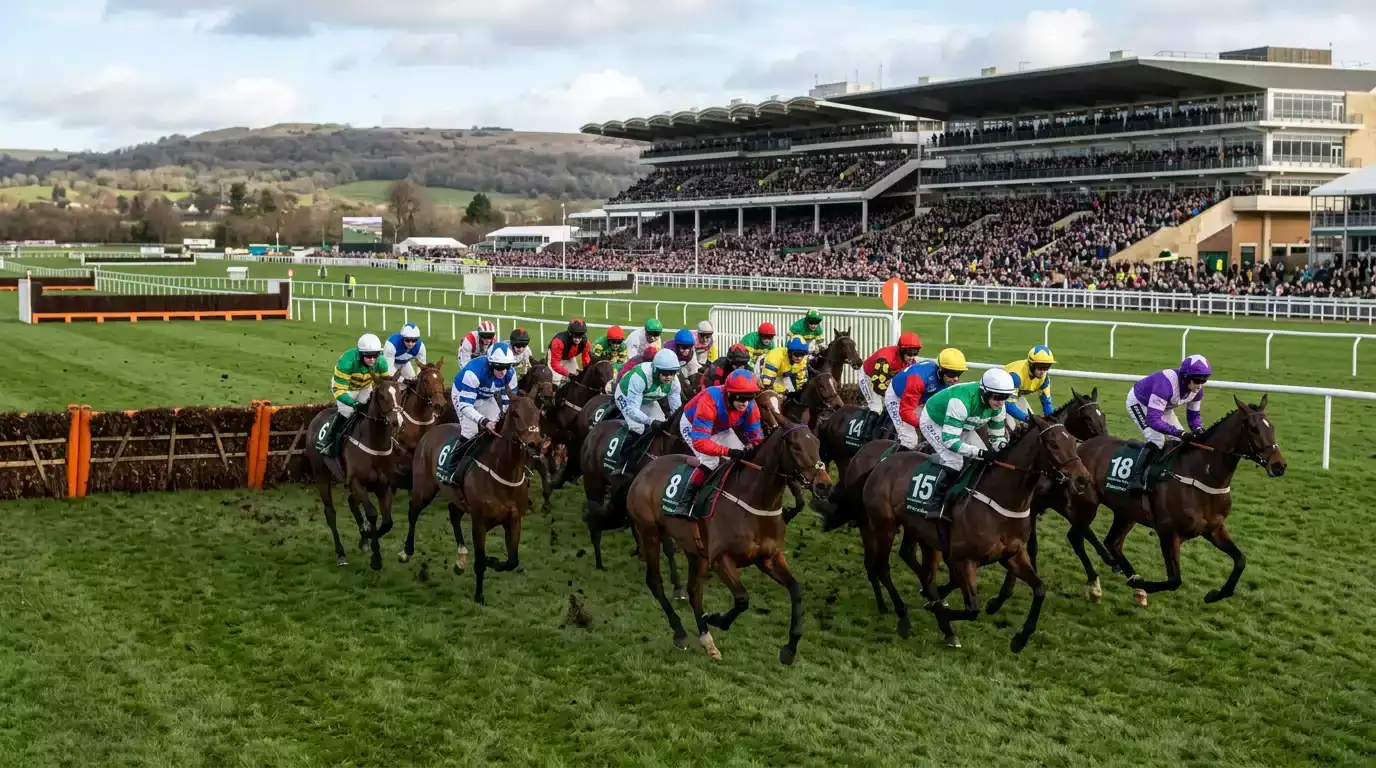
Handicap races flip the equation entirely. The Coral Cup, County Hurdle, Martin Pipe, Grand Annual, Kim Muir — these regularly attract 20 or more runners. At that field size, four places are standard. The fraction remains 1/4 for handicaps. But the real opportunity is that bookmakers layer enhanced place offers on top. In 2026, several operators offered five or six places on the biggest handicap hurdles. Average field sizes in UK jumps racing sit around 7.84, so a 24-runner Cheltenham handicap is more than three times the norm. That distortion is where place bettors find edges.
Between the championship and handicap extremes sit novice races and conditions events. These typically land in the 8 to 14 runner range — three places, 1/4 fraction. Workmanlike terms, no drama. But occasionally a novice hurdle at the Festival attracts 16 or more, tipping into four-place territory. It happened twice at the 2025 meeting, and once the declarations are published on the Monday before the Festival, the terms are locked in. Watch the overnight fields carefully.
Extra Place Offers at Cheltenham 2026: What Bookmakers Paid
Nigel Roddis, Managing Director of Britbet, described the 2025 Cheltenham as a week where 467 team members took bets each day and processed more than 570,000 individual wagers across the four days on course alone. The online volume dwarfs that figure, and it is the online operators who compete most aggressively on extra place terms.
In 2026, bet365 ran their Best Odds Guaranteed programme across every race at the Festival, which meant that place odds taken early in the morning could only improve, never deteriorate, by the off. Combined with their enhanced place offers on selected handicaps, this created situations where a horse’s place payout at BOG exceeded what other bookmakers were offering even with an additional paid place. I tracked three specific handicaps where bet365’s effective place return was higher despite offering one fewer place than a competitor, purely because the BOG uplift was substantial enough to close the gap.
Sky Bet pushed extra places on the biggest fields — five places on the Coral Cup and County Hurdle, and six on the cross-country race where field sizes are reliably large. Their approach tends to be straightforward: more places, sometimes at 1/5 rather than 1/4. The trade-off mirrors what happens at the Grand National, where wider coverage comes at the cost of a slimmer fraction.
Paddy Power and William Hill both ran extra place promotions on selected races rather than across the full card. This targeted approach means you cannot assume enhanced terms are available on every race you want to bet on — another reason to check each race individually rather than assuming a blanket policy.
The key takeaway from the 2026 Festival: no single bookmaker offered the best place terms on all 28 races. The operator with the most places on Tuesday’s card was not necessarily the best option on Friday. I know that sounds like a tedious amount of homework, but it takes ten minutes on the morning of each day to compare the three or four bookmakers you hold accounts with. That ten minutes across four days represents a genuine structural advantage over anyone who just bets with whoever’s app they open first.
Typical Field Sizes at Cheltenham and Their Impact on Place Bets
Here is what nine years of watching Cheltenham declarations has taught me: the field size distribution at the Festival is bimodal. You get a cluster of 6 to 10 runner championship and graded races, and then a separate cluster of 18 to 28 runner handicaps. There is surprisingly little in between. That bimodal pattern means your place betting approach needs to switch cleanly between two modes — tight, selective place bets in small fields, and broader, value-driven place bets in big fields — often on consecutive races during the same afternoon.
The average field size across UK jumps racing in 2025 was 7.84, but Cheltenham handicaps routinely double or triple that average. This matters for place bettors because the number of paid places is a step function, not a linear one. The jump from 7 to 8 runners adds a third place. The jump from 15 to 16 adds a fourth. Each threshold crossing represents a discontinuous increase in the probability of collecting on a place bet.
What I find most useful is mapping each race against these thresholds before the meeting starts. Once the five-day declarations are published, you know which races offer three places, which offer four, and which are sitting on a threshold where a single withdrawal could drop the place count. Races with 16 or 17 declared runners are the ones to watch most carefully. One or two non-runners on the morning of the race can pull you from four places back to three, fundamentally changing the value proposition. I set alerts on my phone for those borderline races and check the morning updates before placing anything.
The other pattern worth noting: Cheltenham’s festival fields have been remarkably stable over the past five years. Championship race entries have actually increased slightly — the number of high-rated jumps horses (135+ rating) grew to 307 in early 2025, up from 288 the previous year — which feeds through to competitive fields even in the graded races. For handicaps, the quality of entries keeps rising because record prize money (194.7 million pounds across British racing in 2025) makes the Festival worth targeting for a wider pool of trainers. More runners means more places, and for place bettors, that structural trend is unambiguously positive.
See also: the betting levy funds the sport you’re betting on — understand where your money goes.
FAQ
How many places are paid in Cheltenham handicap hurdles?
Cheltenham handicap hurdles typically attract 18 to 28 runners, which means four places are paid under standard terms at 1/4 of the win odds. Several bookmakers offer enhanced terms with five or six places on the largest fields, though these promotions vary by operator and by race. Check each bookmaker’s specific offer before the race rather than assuming a standard applies across the card.
Do bookmaker extra place offers apply to all 28 Cheltenham races?
No. Most bookmakers target their enhanced place offers at the biggest-field handicaps rather than running a blanket promotion across all 28 races. Championship races with smaller fields rarely qualify for extra places. The specific races covered vary between operators and are usually announced in the days leading up to the Festival.
Prepared by the Place bet Horse Racing editorial staff.