Record Prize Money Draws More Runners — and That Means More Places
 Available in US

I remember standing in the paddock at Haydock for a Saturday handicap hurdle and counting the runners walking around the pre-parade ring. Eighteen. Three years earlier, the same fixture on the same weekend had attracted eleven for an equivalent race. The difference? Prize money. The race had been upgraded, the first-place purse was nearly double what it had been, and trainers from further afield had decided the trip was worthwhile. Eighteen runners meant four paid places instead of three. For the four place bettors in my circle that afternoon, the prize money increase had created value that did not exist before — not through better odds or a sharper market, but through the simple mechanics of more horses on the track.
UK horse racing prize money hit a record 194.7 million pounds in 2025, up 3.5% from 188.0 million the year before. Kevin Walsh, Racing Director of the Racecourse Association, described the increase as a continued incentive for participants to field horses at British racecourses. That framing matters for place bettors: prize money is the engine that determines field sizes, and field sizes determine how many places are paid. The chain from prize fund to your place bet payout is direct and measurable.
See also: place bet horse racing for industry data and market analysis.
194.7 Million Pounds: Where the Money Comes From
The prize fund has two main tributaries. Racecourses contributed 103.4 million pounds in 2025 – 53% of the total. The Horserace Betting Levy Board added 63.2 million, a 4.6% increase on the previous year. The remainder comes from owners’ entry fees, sponsors and other commercial contributions.
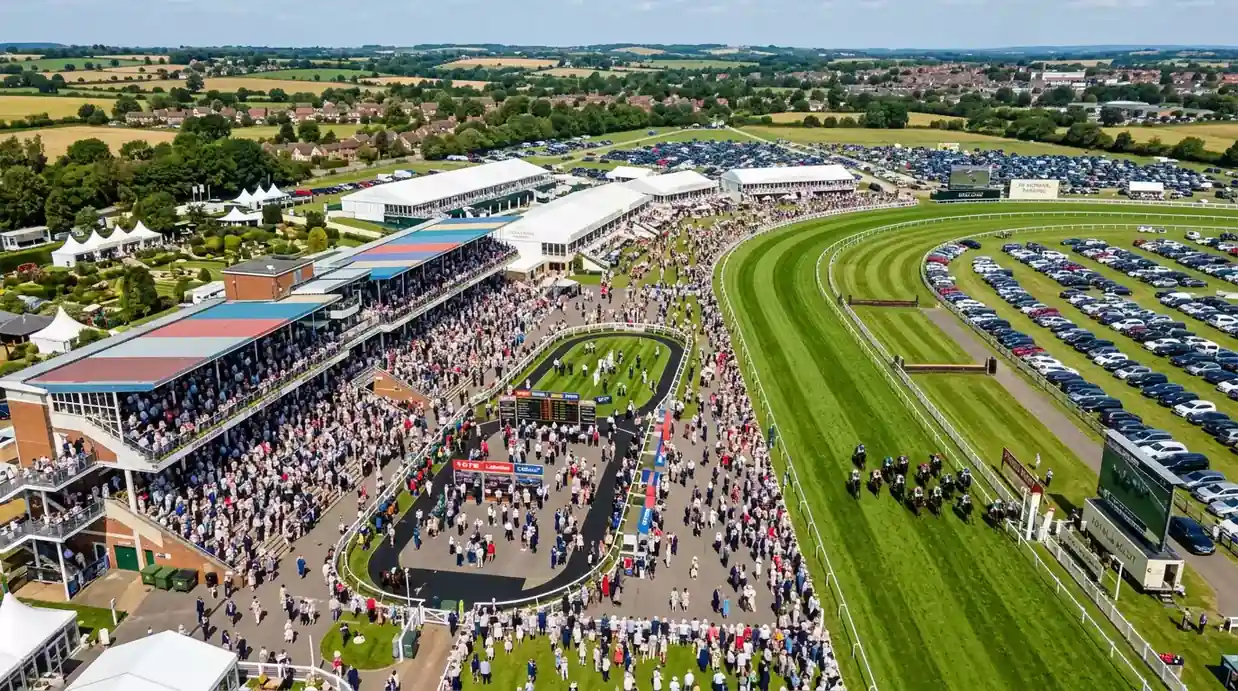
The racecourse contribution reflects a commercial calculation: higher prize money attracts better fields, better fields attract more racegoers, more racegoers generate more gate revenue, hospitality sales and on-course betting turnover. UK racecourse attendance exceeded 5 million in 2025 for the first time since 2019, a 4.8% year-on-year increase. That attendance growth is partly driven by the “Going Is Good” marketing campaign, but it also reflects the quality of the racing product — and quality is a function of competitive fields, which prize money buys.
HBLB’s contribution comes from the statutory levy on bookmakers’ gross profits. The levy reached 108.9 million in 2024/25, and the Board allocated 63.2 million of that to prize money. The allocation is a board-level decision that balances prize funds against other priorities including equine welfare, veterinary science and integrity services. In years when the levy yield is strong, the prize money allocation tends to rise. In weaker years, the Board draws on reserves — currently 58.7 million — to maintain stability.
The ownership community also contributes through entry fees and supplementary payments. In major races, owners may pay several thousand pounds in entry and declaration stages, which flows directly into the prize pool. For the place bettor, these contributions are invisible but material — they help push prize funds to levels that attract the field sizes needed for four-place races.
More Prize Money, Bigger Fields, More Paid Places
The relationship between prize money and field size is not theoretical — it shows up in the data with remarkable consistency. Races with prize funds above 25,000 pounds attract an average of 2.3 more runners than races below 10,000, across both Flat and National Hunt. That difference is the gap between a 10-runner race with three paid places and a 12-runner race that is closer to the patterns where place betting starts to offer genuine value.
At the top end of the scale, heritage handicaps with six-figure prize funds regularly attract the maximum field sizes allowed by safety regulations. The Cambridgeshire, the Cesarewitch, the Ebor — these races consistently produce 20+ runner fields with four paid places and enhanced terms from bookmakers. The prize money is the reason. A trainer making the 200-mile trip from Lambourn to York with a handicapper needs the prize for fourth or fifth place to cover the costs of the expedition. Without it, the horse stays home and the field shrinks.
The number of high-rated jumps horses also feeds into field quality. In early 2025, 307 horses carried a rating of 135 or higher in National Hunt racing, up from 288 the previous year. A larger pool of quality horses means more competitive fields at the graded level, which means better racing, higher attendance and more betting turnover. The cycle is virtuous when it is running: money flows in, fields grow, quality improves, fans arrive, more money flows in.
Average field sizes in 2025 sat at 8.90 for Flat and 7.84 for Jumps. Those numbers are adequate for maintaining three-place races as the norm, but they are not spectacular. The prize money increase has arrested what looked like a declining trend in field sizes through the early 2020s, and in some race categories has reversed it. Whether that reversal is sustainable depends on whether prize money continues to grow or plateaus as the betting turnover that funds the levy comes under continued pressure.
Can Prize Money Keep Growing as Turnover Falls?
This is the question that keeps racing’s administrators awake at night, and it has direct relevance to anyone whose betting strategy depends on large-field races offering four paid places.
Betting turnover on UK horse racing has fallen in every one of the last three reporting periods. Average turnover per race is down 19% compared to 2021/22. The levy has risen despite this because bookmaker margins have expanded, but that expansion has limits. If turnover continues to decline, the point arrives where even wider margins cannot generate enough gross profit to sustain the current levy level. HBLB is already budgeting for a reduction, projecting 103 million in levy income for 2025/26 against the 108.9 million achieved in 2024/25.
The BHA’s own modelling suggests a 6-7% reduction in UK race numbers by 2027 compared to 2024. Fewer races means fewer opportunities for place betting. If the cuts fall disproportionately on the lower-grade midweek fixtures — which is the most likely scenario, as those are the races with the thinnest commercial justification — the average field size could actually increase as the surviving fixtures absorb the horses that would have run elsewhere. But the total number of place betting opportunities would still shrink.
The tax environment adds further pressure. The planned increase in remote betting tax from 15% to 21% will compress bookmaker profits, reducing the pool from which both commercial spending and levy contributions flow. BHA estimates the first-year cost to racing at 66 million pounds. If that estimate proves accurate, the record prize money of 2025 may represent a high-water mark rather than a stepping stone. The interplay between levy income and prize fund sustainability is explored further in the betting levy breakdown.
See also: learn how to back for a place only with our place bet without each-way guide.
FAQ
Does higher prize money guarantee bigger field sizes?
Not as a guarantee, but the correlation is strong. Races with higher prize funds consistently attract more runners because the financial incentive justifies the cost of entry, transport and jockey fees for a wider pool of trainers. However, other factors — the going, the race programme, the proximity of alternative fixtures — also influence field sizes. Prize money is the most reliable predictor of field size but not the only one.
Which UK racecourses offer the highest prize money for handicaps?
The major Flat festivals at Ascot, York, Goodwood and Newmarket offer the highest-value handicaps, with some carrying prize funds above 500,000 pounds. For National Hunt, Cheltenham, Aintree and Sandown lead the way. Heritage Handicaps — races with historical significance and protected status in the fixture list — typically carry the richest prizes and attract the largest fields, making them the most productive hunting ground for place bettors.
Prepared by the Place bet Horse Racing editorial staff.